Four ways to open a door without a handle
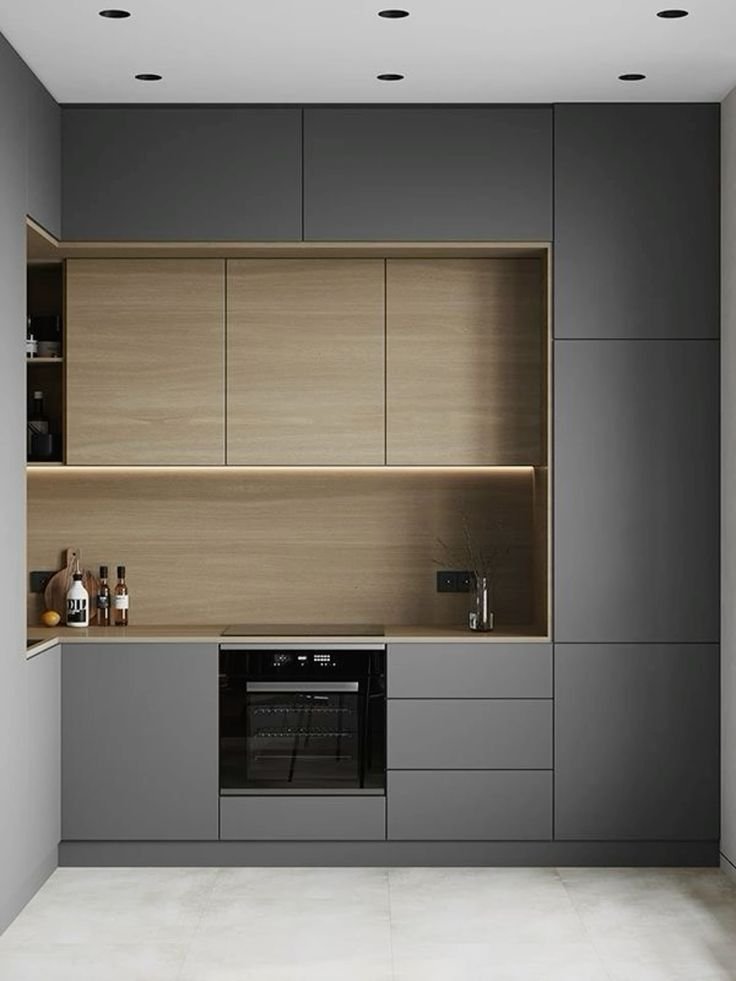
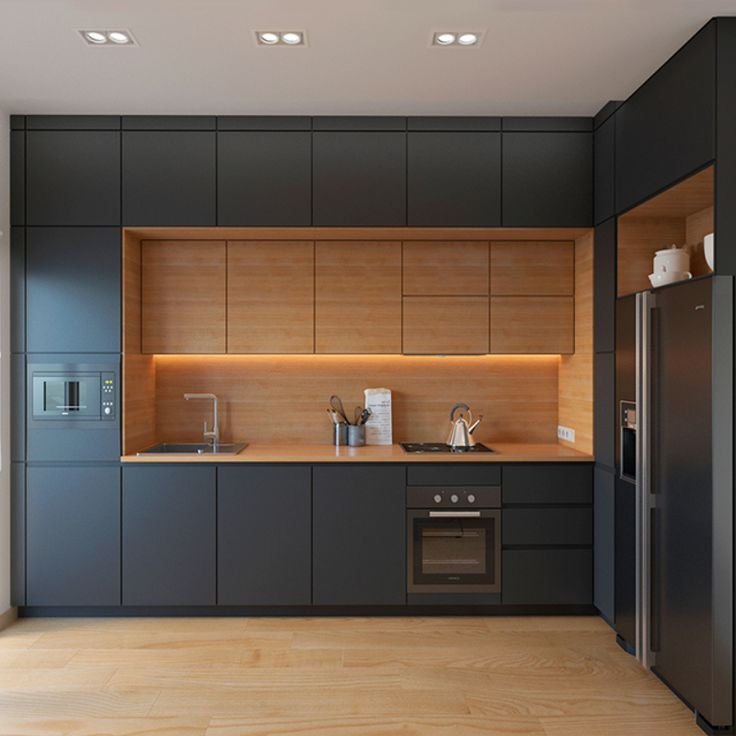
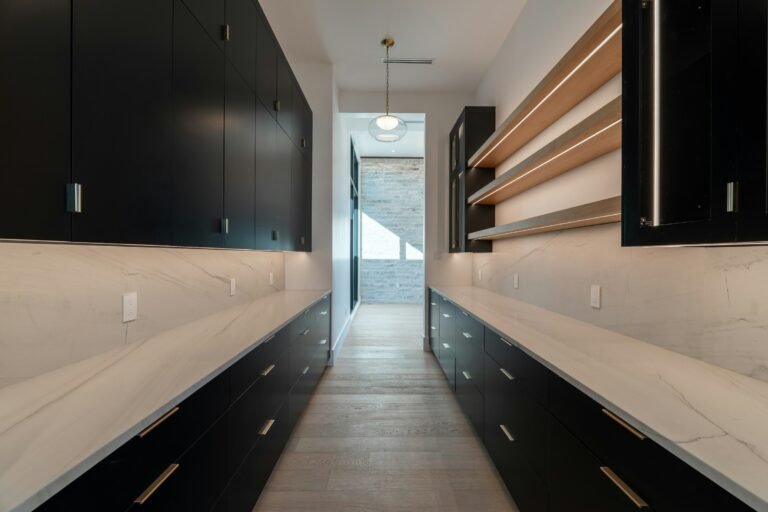
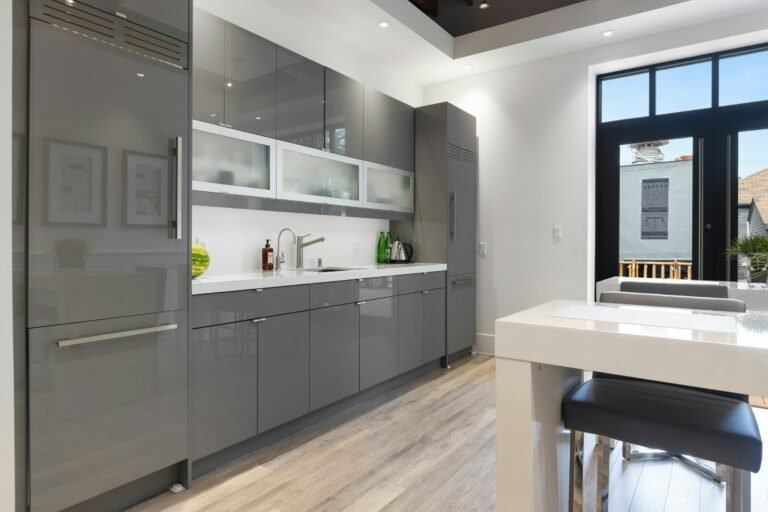
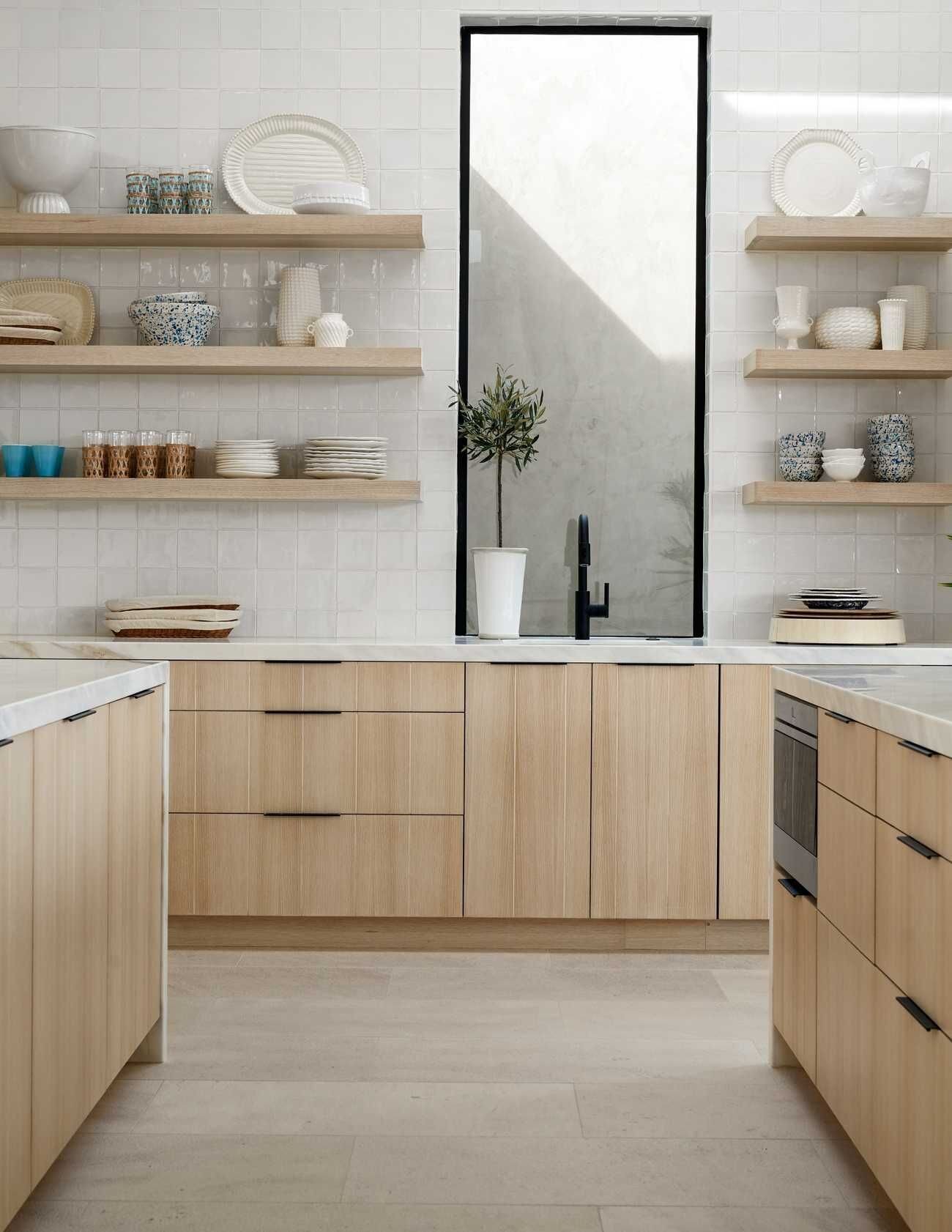
The finger-pull rail is an aluminium channel, usually black, white or a metal finish, fitted along the top of each drawer front and under the uppers. Your fingers go behind the front. It is the most common system, it has no moving parts, and it is the one in the photograph above.
The shadow-line rail is the same idea taken further: the rail is recessed so deeply that the gap reads as a black line drawn across the kitchen. It is the signature of a minimalist kitchen and it asks for perfectly level carcasses, because the line shows every millimetre.
The J-pull is a profile machined into the top edge of a flat board front, so the door is its own handle. No separate rail, nothing to catch. It only works on board we cut ourselves, because a wrapped door cannot be machined after it is made, and in our pricing it is the cheapest of the four.
Push-to-open uses a spring catch: press the front and it springs open far enough to get your fingers behind it. We use it on uppers, where a rail would be at head height, and on tall units, except above the rangehood, where grease makes a push front hard to keep clean. We fit Blum TIP-ON BLUMOTION, the version with the soft close built back in. We will also say, honestly, that push-to-open is more fun than practical: the front wants a clean push every time, so we steer most kitchens to a rail and keep push-to-open for the uppers.
Why it is harder to make
A handle hides a lot. Take it away and every gap between fronts is visible, every edge is on show, and the grain across a run of drawers either lines up or it doesn’t. We machine the fronts in one batch so the gaps are even, we plan the grain on the computer before a sheet is cut, and we check the fronts against each other before they leave the workshop. That is why a finger-pull kitchen from us costs more than the same kitchen with handles, and why it looks the way it does.
Where it suits, and where it doesn’t
Finger-pull fronts suit the modern, minimalist, Japandi and Scandinavian kitchens on our style pages, and it is the right answer whenever the kitchen sits in the living room, because a wall of flat fronts reads as furniture. It suits families, too: nothing to catch a hip or a child’s head.
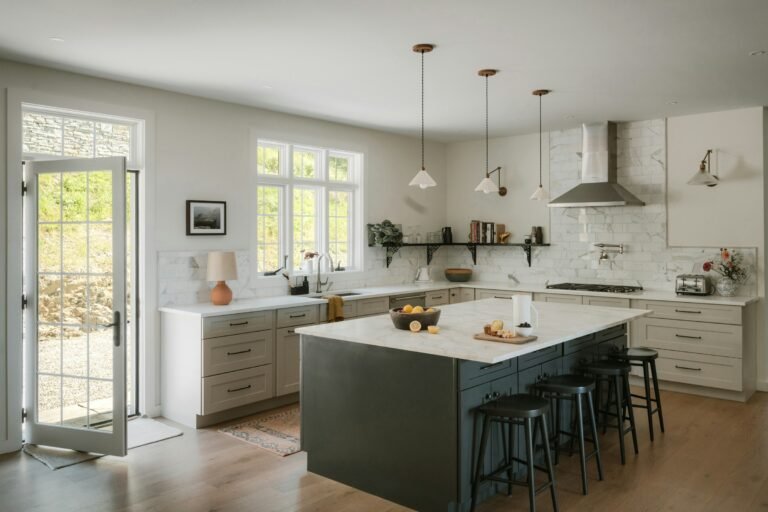
It does not suit a Shaker or profiled door, where the frame wants a handle, and it does not suit anyone who hates fingerprints on a gloss front. We solve the second problem by steering finger-pull kitchens to the finishes made to resist fingerprints: Polytec Venette and Ultramatt, Laminex AbsoluteMatte. Dark colours show marks in every range, so we test a sample with you first.
What it costs
Going without handles adds between $1,500 and $4,500 to a kitchen, depending on the system and the number of fronts. A J-pull is the cheapest route. Push-to-open on the uppers with a rail below is the most common combination and sits in the middle. The money you would have spent on handles comes off, which on a big kitchen is not nothing.