The problem with corners
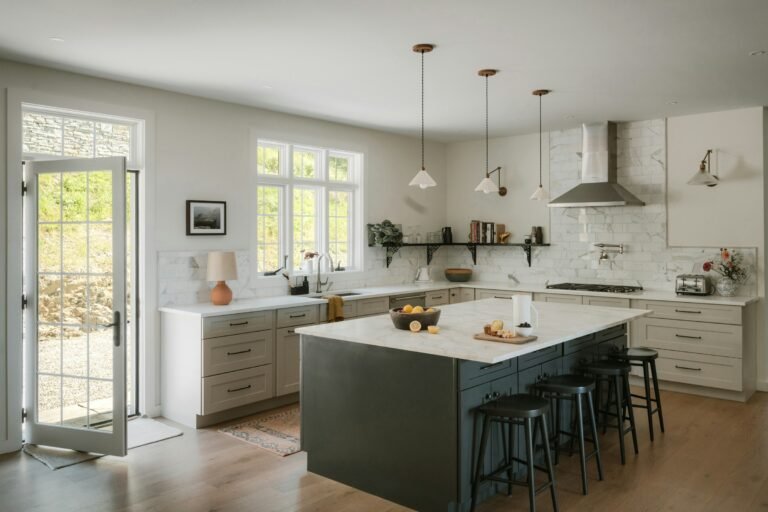
Where two runs of base cabinets meet, there is a box about 900 mm square that no door opens onto properly. In a kitchen that has not been thought about, that box holds a saucepan you have not seen since 2019. In one that has, it holds the most-used pots in the house on a tray that swings out to meet you. The difference is a piece of hardware and a decision made at drawing time, which is why we ask about corners in the first design meeting.
The four that work
The blind corner with a pull-out. One straight door, and behind it a mechanism that swings a pair of shelves out through the opening and then slides the hidden pair across to meet you. It uses the whole corner, it takes heavy pots, and it is the solution we fit most. It is the one we would put in our own kitchen.
The corner carousel. A bi-fold door on the corner itself, with two or three round shelves that spin. Easier to use than the pull-out, and it wastes a little of the space at the back of the circle. Good for a kitchen where the corner will hold lighter things.
The angled corner cabinet. A single door set at 45 degrees across the corner, with a big fixed shelf behind it. The old-fashioned answer, and still a good one when the corner is a wide one and you want a lot of open space inside for a stand mixer or the slow cooker.
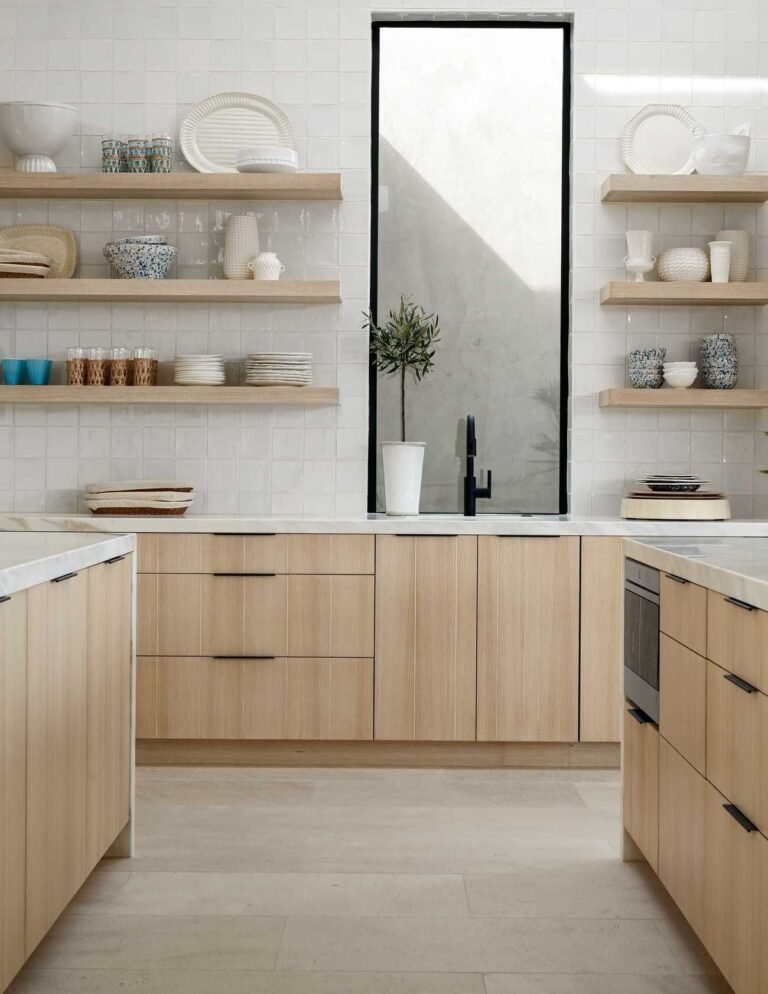
The open corner. No door at all: the corner becomes open shelving, curved or square, facing the room. This is the corner solution for the end of an island or a run that meets a wall, and it is where our curved end cabinets come from. Shelves you see every day tend to stay tidy.
The upper corner
Upper cabinets have a corner too, and it is usually a diagonal cabinet with a single door, deep and dark. We prefer to leave the upper corner open as shelving, or to run one upper cabinet through to the wall and stop the other short, which gives you a full-depth cabinet on one side and a neat return on the other. It costs less and it works better.
What it costs
A corner solution adds between $600 and $2,200 to a kitchen depending on the mechanism, with the angled cabinet at the bottom and a swing-out pull-out, the Kesseböhmer LeMans II or the SIGE unit we fit most, at the top. The cabinet was there anyway; we are only making it open.