Why the bench is dark
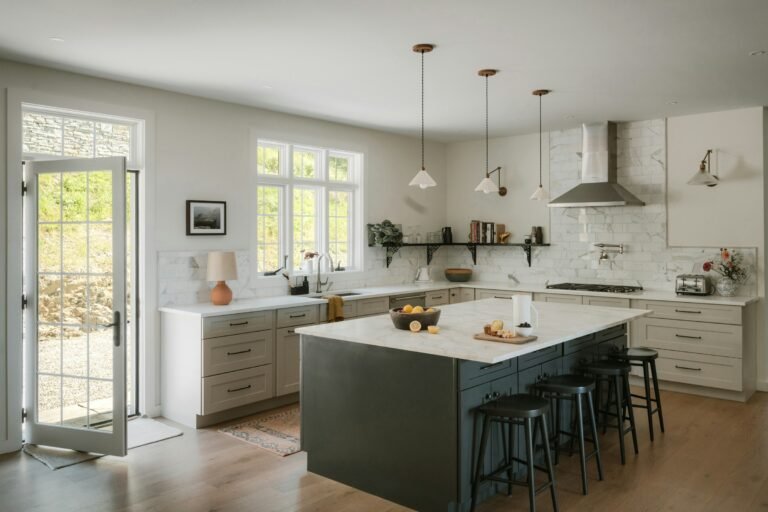
Stand at a kitchen bench under a ceiling light and look down: you are in your own shadow. Every kitchen lit only from above has the same problem, and every one that has a strip of light under the upper cabinets does not. Under-cabinet lighting is not decoration. It is the light you cut, read a recipe and wipe the bench by, and it is the single upgrade people tell us they should have done sooner.
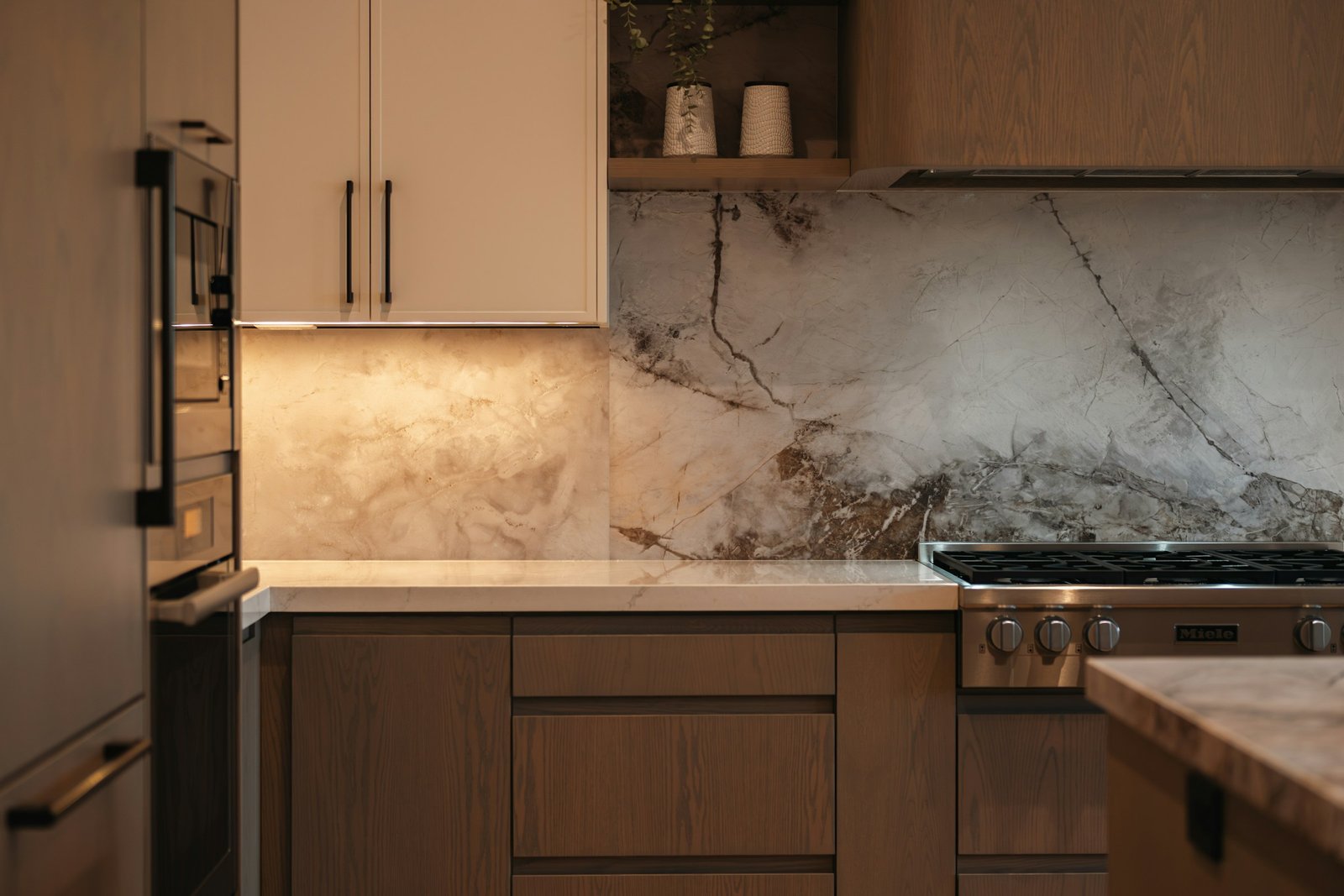
It also does something to the room. In the kitchen above the strip under the uppers washes down the marble splashback, and the stone that would have been flat under a ceiling light suddenly has depth. Turn the ceiling lights off in the evening and the kitchen becomes a quiet, lit object at the end of the living room.
How we build it in
The light is an LED strip in an aluminium channel with a diffuser, so you see a line of light and not a row of dots. We fit it behind a pelmet or inside the shadow rail of a handle-less kitchen, set back from the front edge so it lights the bench and not your eyes. The driver hides in a cabinet. The switch is where your hand already goes: on the wall beside the cooktop run, where the electrician places it, or on a sensor under the bench.
Colour matters. We use warm white, around 3000 K, with a colour rendering index of 90 or better, for a kitchen with timber or stone. The strip in a cheap kit renders colour badly, which is what makes food look grey and oak look like plastic, whatever its colour temperature. We fit a dimmable driver and a dimmer, because the light you want at 6 am is not the light you want at 9 pm.
Beyond the uppers
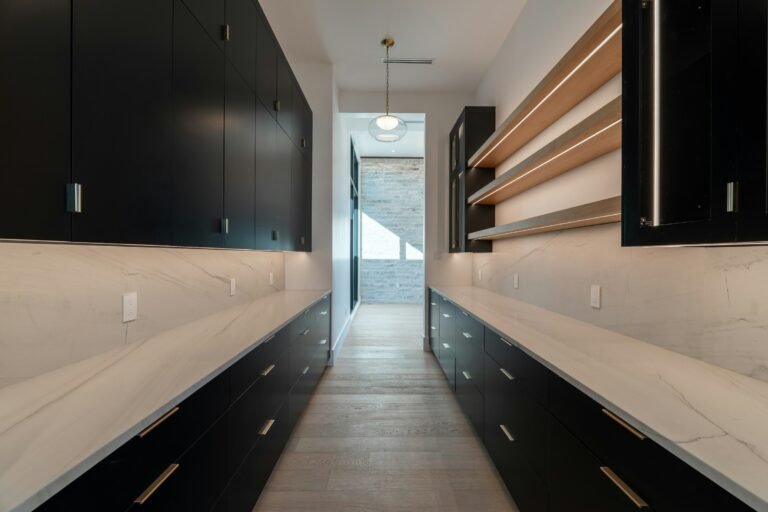
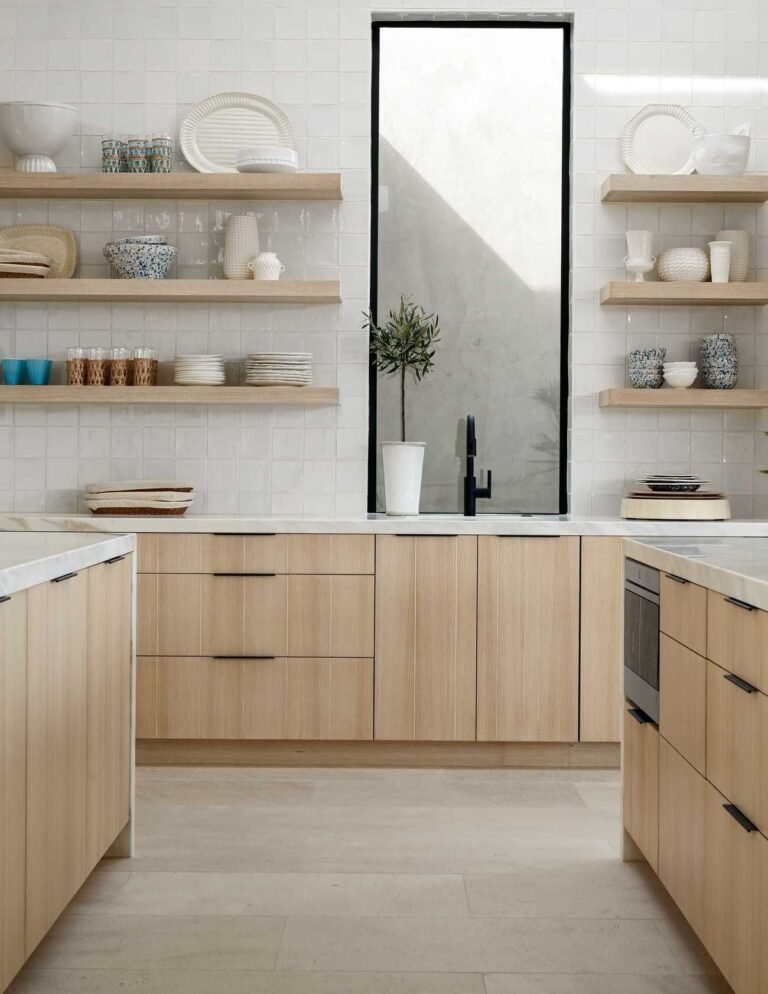
The same strip does three other jobs well. Under an open shelf, it makes the shelf read at night. Inside a tall pantry or a glass-fronted cabinet, on a door switch, it lights the contents the moment the door opens. Under the island overhang or along the kicker, it floats the island off the floor and gives you a night light on the dimmer that draws very little.
What it costs
Under-cabinet lighting adds between $400 and $2,500 to a kitchen, depending on the length of the run and how many cabinets and shelves are lit. Our part is the channels, the strips, the drivers and the cabinetry that hides them; the final connection, and everything at 240 volts, is by your licensed electrician, and we coordinate the two so the wiring is in the wall before the cabinets go on it.