What makes a kitchen Hamptons
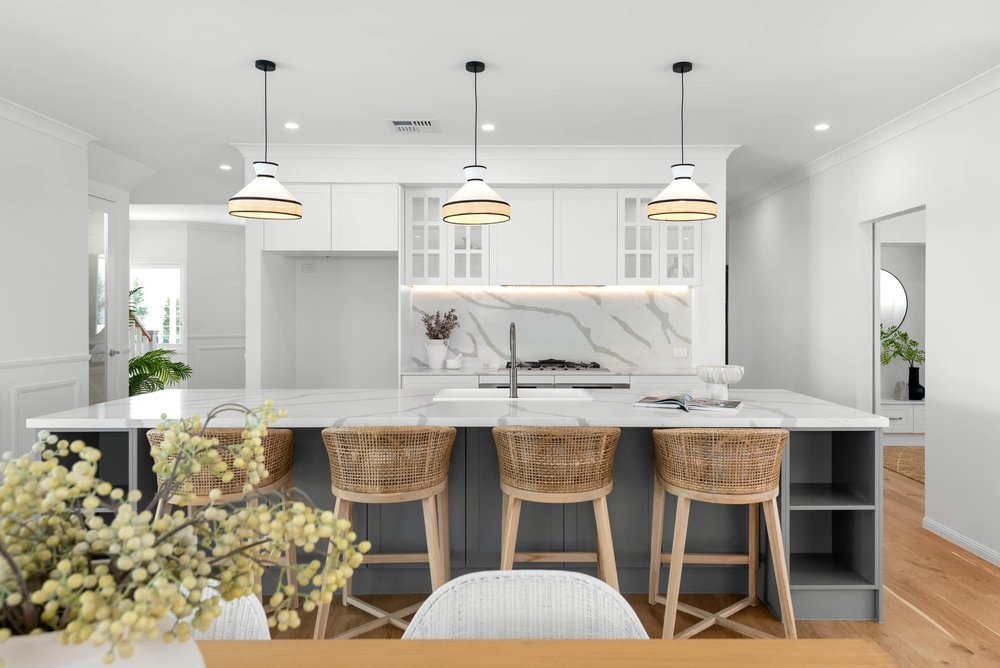
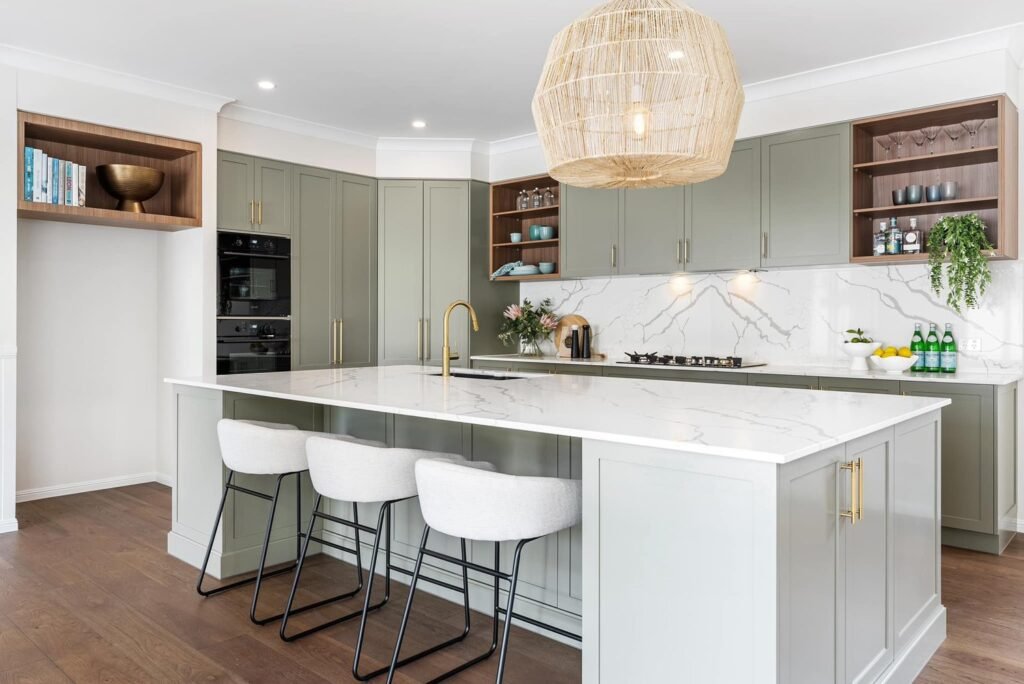
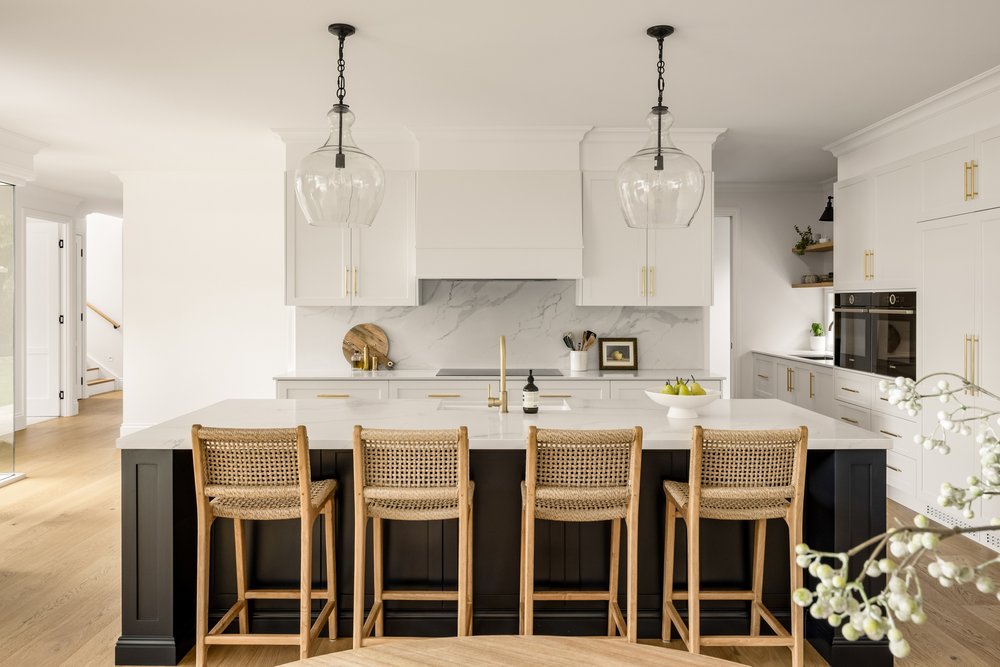
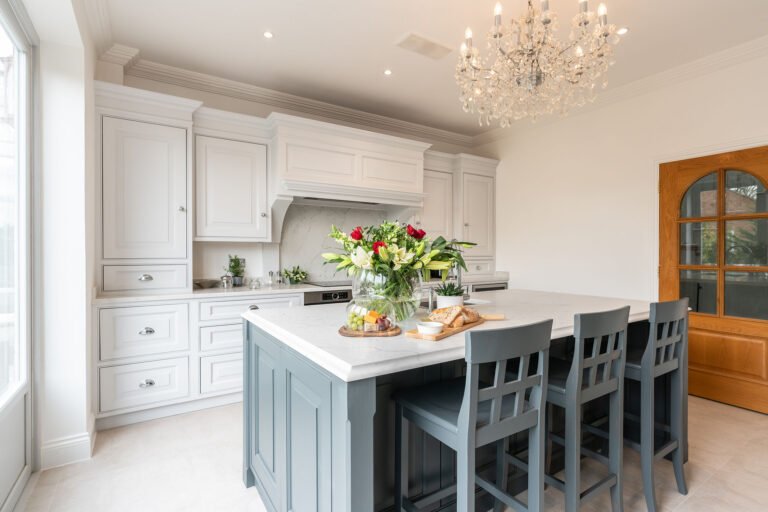
A Hamptons kitchen is a Shaker door done properly, and then the discipline to stop there. A flat centre panel, a square-edged frame, no ornament on the frame itself. White or a soft off-white is the classic, and a blue, a green or a grey Shaker is just as much Hamptons; the gallery below shows both. A stone benchtop with a marble look and a thick edge, brass or polished-nickel pulls, and glass in a couple of the upper doors for the pieces worth showing. Woven pendants over the island. Pale timber underfoot. It borrowed its name from Long Island beach houses, but it settled into Australian coastal homes so completely that it now reads as ours. Coastal is its looser cousin: the same whites with sand and sea-blue, rattan and rope, and a laminate bench is allowed. Hamptons is the dressed-up member of that family.
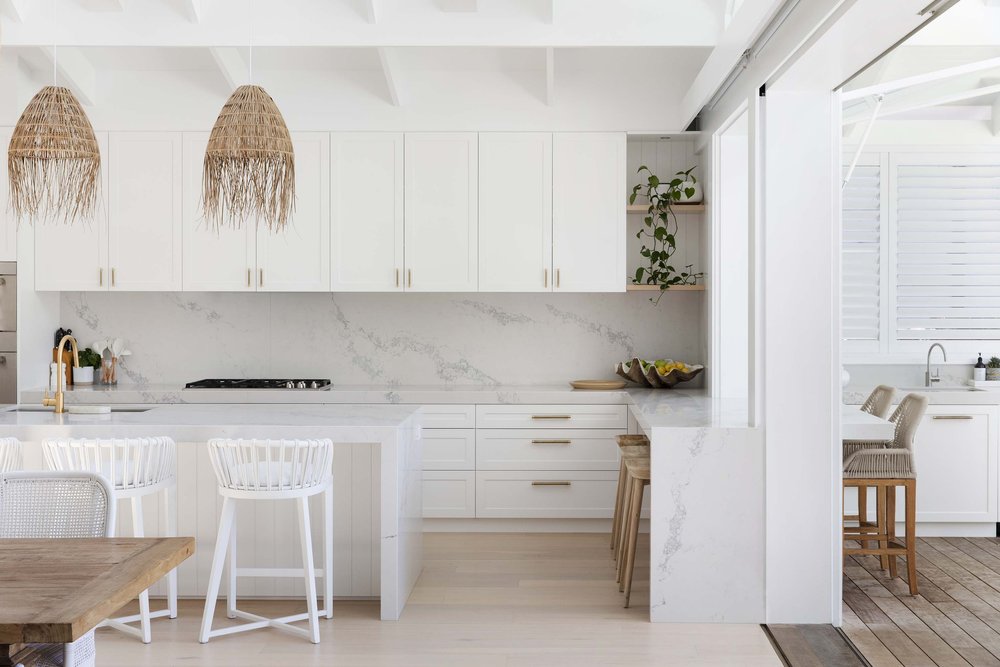
The kitchen in the photograph above has every one of those decisions in it, and none it doesn’t need: the white Shaker run, the brass bar pulls, the Calacatta-look stone taken up the wall and down the island end, the V-groove island face, the rattan lights, the painted rafters, the whitewashed boards. Nothing is competing.
How we build it
The door carries the entire look, so it is the one thing we won’t compromise on. The Shaker front is a Polytec thermolaminated door, Hampton, Ascot or Stratford, and we specify it in 21 mm rather than 18 because we like the deeper frame it gives; it reads like a painted timber door without the chipping paint picks up in a working kitchen. A matt finish reads as painted; a smooth finish reads as a fine satin paint. Both wipe clean.
Benchtops are a 20 mm slab in a Calacatta or Statuario pattern. Engineered stone has been banned in Australia since 1 July 2024, so today that means a crystalline silica-free mineral surface such as Caesarstone Mineral, a porcelain, or the real marble. Where the budget allows, we mitre the front edge to 40 mm and run the same slab down the island end as a waterfall, as in the photo. That thick, continuous edge is what separates a Hamptons bench from a white bench. The classic Hamptons splashback is tile. Our version takes the same stone up the wall, so the veins run on and there is no grout to clean; a tiled splashback is just as correct and costs less.
Hardware is the place to spend. A solid brass bar pull or a polished-nickel cup handle costs more than a white kitchen’s handles by an amount you will never notice on the invoice and always notice on the drawer. We fit them centred and level, which sounds obvious and rarely is.
In a Perth home
Hamptons loves our light. In the western suburbs, in Cottesloe, Swanbourne, Nedlands and Claremont, homes with big north-facing windows and pale floors carry it without effort. It also rescues a 1980s brick-and-tile better than any other style: white Shaker, a pale timber floor and a painted timber ceiling, and the house is suddenly on the coast it was always near.
Where it struggles is the small, dark galley. The frames, the pendants and the thick benchtop all add visual weight, and in a narrow room that weight closes in. If that is your kitchen, look at our Scandinavian or minimalist pages first, the same white with the frames taken away, and come back to Hamptons for the laundry or the scullery.
What it costs
A full Hamptons kitchen from us typically lands between $42,000 and $60,000 for the joinery: designed, made in our Malaga workshop and installed. Benchtop stone, appliances and the trades are separate bills, and we say what they are on the pricing page. The spread is mostly island size and how many glazed uppers you want. It sits a little above our flat-front modern kitchens because profiled doors cost more than flat ones, the glazed uppers add up, and you will want the good handles. The mitred stone edge sits on the stone bill, not ours.